Basement Flooding Cleanup in Colorado Springs, CO
☎ (719) 259-0864Tap to call the 24/7 Colorado Springs dispatch line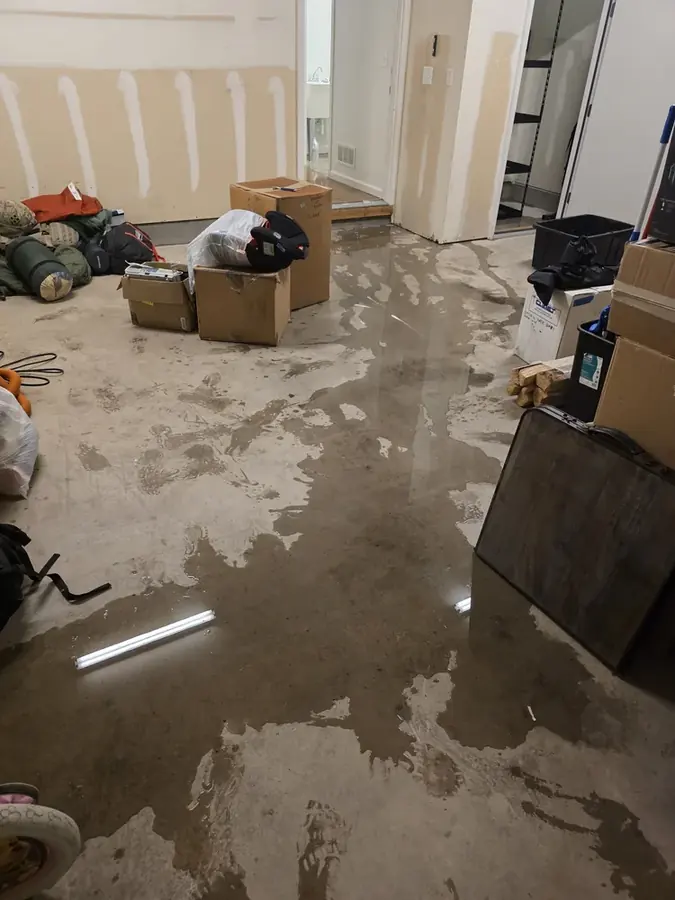
Water in a finished basement is the costliest loss most Colorado Springs homeowners face, because below grade is where the damage sits and water leaves slowest. Down here it rarely comes from a burst pipe. It pushes in through the foundation, weeps up the seam where the wall meets the slab, or pours in through a window well that filled in a storm. Mizuna Water Damage pumps it out, dries the space to a documented standard, and stops mold, on-site across the city.
How the crew handles basement flooding cleanup in Colorado Springs
Call & dispatch
A dispatcher answers 24/7 and the nearest Colorado Springs crew rolls with truck-mounted pumps, air movers, and moisture meters.
On-site assessment
The crew finds the source and the full reach of the water, including what soaked into subfloor and wall cavities.
Extract & dry
The extraction crew pulls the standing water, then runs air movers and dehumidifiers to a verified dry standard, not just the surface.
Verify & document
The drying team logs moisture readings until the structure is dry, then documents the loss for your insurance claim.
Water in your finished basement? What to do first
A flooded basement mixes water and electricity, so safety comes first. Do not wade in after belongings until the power to that level is off.
- Cut power to the basement at the breaker, but only if you can reach it without standing in water
- Stay clear of standing water near outlets, cords, the furnace, or the water heater
- Photograph the water line and the room before anything moves, for your claim
- Call (719) 259-0864 and crews walk you through the rest while a crew rolls
Why Colorado Springs basements take on water
Below grade rooms take on water for reasons that have little to do with plumbing, often more than one at once:
- Hydrostatic pressure from saturated ground that forces water through a concrete wall
- Seepage up the cove joint, where the foundation wall meets the floor slab
- Window and egress wells that fill and pour through the glass during a downpour
- Foundation cracks that open as expansive clay soil swells wet and shrinks dry
Expansive clay under much of the Front Range is the quiet culprit, moving enough to crack walls and slabs that weep the next wet spell. West side homes and older houses near Fountain and Monument creeks see it first. Check whether your block sits in a mapped flood risk on the FEMA flood maps, and the City of Colorado Springs Stormwater Enterprise tracks drainage across town. When a spring melt or a monsoon cell drives the water, the cleanup overlaps the snowmelt and storm water cleanup, and a pump that let the pit overflow is the sump-pump failure and backup work.
How the crews pump out and dry a below-grade flood
Below grade drying is its own discipline: the dry mountain air that clears a main-floor spill never reaches water trapped in a wall cavity or under the pad, so local crews dry to a metered number, not to how the room looks. Submersible pumps and the water extraction crews clear the standing water, soaked pad and wicked drywall come out so the wall and slab dry, and the structural drying team meters the framing daily to a documented dry point before the local crews treat for mold and close it back up. If the water came up a floor drain carrying sewage, trained crews handle it as the sewage and black water cleanup, with containment and disinfection rather than a dry out.
Basement taking on water through the walls or a window well? Call now and a crew is on the way across Colorado Springs to pump it out.
☎ Call (719) 259-0864What your insurer needs to see
Coverage depends on how the water reached you. Seepage and groundwater are treated differently from a pipe break, and surface water that ran in over the ground is often a separate flood policy. Either way, crews hand your adjuster a clean file: dated photos, daily moisture readings that show the structure drying to a documented point, and a written scope, and the crews work directly with your carrier so you generally pay only your deductible.
Grade and gutters decide your next flood
On expansive soil, most repeat basement floods trace back to water pooling against the foundation. Ground sloping toward the house, downspouts dumping at the wall, and a window well with no working drain all push water to the cove joint. Ask the crew to flag these while local crews dry.
Why Colorado Springs calls the local pros first
Rapid local response
The response team answers 24/7, and the nearest crew heads out the moment you call, day or night, across El Paso County.
IICRC S500 drying standard
Trained crews run truck-mounted pumps, air movers, and moisture meters, drying to a verified standard, not a mop and a fan.
Claim-ready documentation
The loss is documented with photos and daily moisture readings, the paperwork an adjuster needs to move a claim.
Front Range water experts
Altitude freeze, Hail Alley roofs, burn-scar runoff, and finished-basement sump failure, so the local pros know how water moves here.
From the Broadmoor to Briargate, El Paso County is covered
Colorado Springs water damage pros respond across El Paso County, day or night.
Colorado Springs water damage pros cover all of Colorado Springs and El Paso County, day or night, with a crew dispatched to your neighborhood on the same call.
Coverage runs across Colorado Springs, Old Colorado City, Manitou Springs, Broadmoor, Briargate, Powers, Monument, Fountain, and Security-Widefield.
See every neighborhood and ZIP covered ›Related restoration services
Common questions, answered
My basement flooded overnight, how fast can you get here?
Crews answer live 24/7 and reach most of Colorado Springs with submersible pumps and truck mounted extractors. Below grade water climbs the drywall fast, so the sooner the local crews pump it out, the more of the finished space stays savable.
Why does my Colorado Springs basement take on water?
Usually it is the ground rather than a pipe. Saturated soil puts hydrostatic pressure on the walls, water seeps up the cove joint where the wall meets the slab, window wells fill and pour through the glass, and expansive clay opens foundation cracks that weep every wet spring.
Water is seeping up where the wall meets the floor, what is that?
That seam is the cove joint, and it is the most common path for below grade water. When the soil outside is saturated, pressure pushes water through the joint and up onto the slab. The crews pump it out, dry the wall cavity to a metered standard, and can point out where the water is getting in.
Is the water in my basement dangerous?
It can be. Stay out of standing water near outlets, cords, and the furnace until the power to that level is off. Water that came up a floor drain or crossed the yard can also carry bacteria or sewage, so trained crews test it and handle it by category rather than assuming it is clean.
Can you save the carpet and drywall, or does it come out?
It depends on the water and how long it sat. Carpet pad below grade usually comes out, and drywall that wicked water up the wall is cut back so the cavity can dry. Local crews save what can be dried in place and document what cannot for your claim.
How do you keep mold from growing below grade?
The local crews dry the space to a metered standard, not just until it looks dry, and treat the surfaces before crews close up. That matters here because a below grade room stays cool and damp, and wet framing can grow mold in 24 to 48 hours if it is left alone.
Will my insurance cover a flooded basement?
Often, but it depends on how the water got in and the endorsements you carry. Seepage and groundwater are treated differently from a pipe break, and surface water is usually a separate flood policy. Trained crews document the source and the damage the way adjusters expect so your claim has what it needs.
How do I keep my basement from flooding again?
Most repeat floods trace back to water pooling against the foundation. Regrade so the ground slopes away from the house, extend downspouts past the wall, keep window well drains clear, and seal foundation cracks. On expansive soil these small fixes prevent the next cove joint leak.
Colorado Springs' water damage crew is standing by
Water sitting means damage spreading. Call Mizuna Water Damage and a local crew heads out across El Paso County, day or night.
(719) 259-0864Call now, a local crew picks up day or night