Water Extraction and Removal in Colorado Springs, CO
☎ (719) 259-0864Tap to call the 24/7 Colorado Springs dispatch line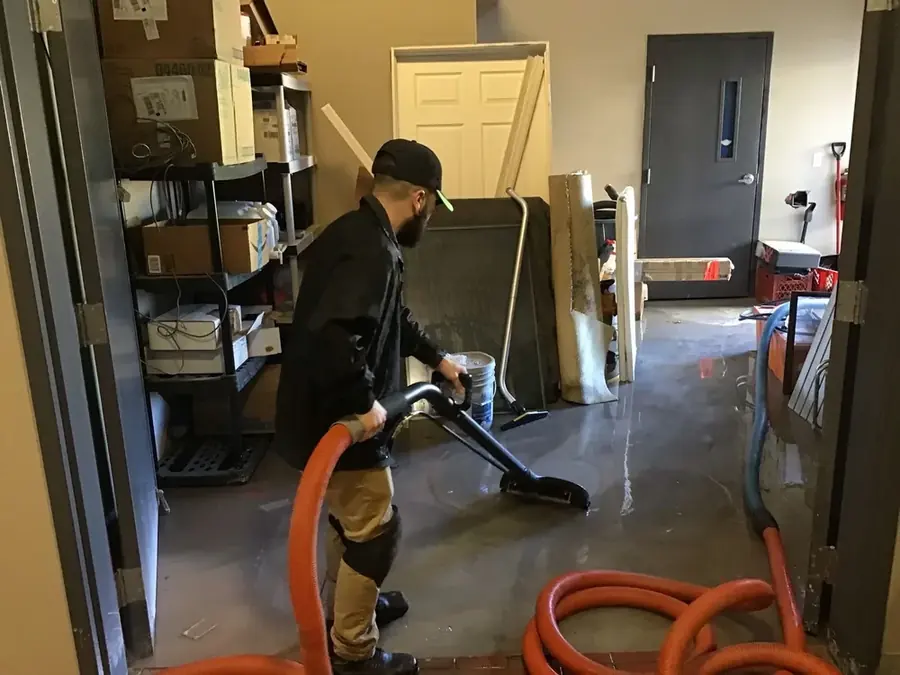
Water extraction is the emergency front door to every water damage job, and the faster the standing water is gone, the less it soaks into your floors, your drywall, and your framing. Mizuna Water Damage runs truck mounted and portable extractors plus submersible pumps to clear standing water across Colorado Springs, then hands off to a full structural dry out, on-site any hour of the day.
How the crew handles water extraction and removal in Colorado Springs
Call & dispatch
A dispatcher answers 24/7 and the nearest Colorado Springs crew rolls with truck-mounted pumps, air movers, and moisture meters.
On-site assessment
The crew finds the source and the full reach of the water, including what soaked into subfloor and wall cavities.
Extract & dry
The extraction crew pulls the standing water, then runs air movers and dehumidifiers to a verified dry standard, not just the surface.
Verify & document
The drying team logs moisture readings until the structure is dry, then documents the loss for your insurance claim.
The extraction process
Extraction is fast work, but it is not just running a wet vacuum, and the order matters. Pulling the bulk water first, before crews ever set a dryer, is what keeps a one room loss from becoming a whole floor loss. Crews check for electrical and slip hazards, find the water source, and stop any active inflow, then map how far the water spread with meters and thermal imaging so nothing gets left wet. Truck mounted and portable extractors pull water from carpet and hard floors, submersible pumps clear deep standing water, and the crews pull baseboards and lift the edge of floating floors so trapped water underneath comes out, not just the surface. With the water gone, the structural drying team sets air movers and dehumidifiers to finish the job.
Standing water in your home right now? Call and a crew is on the way across Colorado Springs with truck mounted and submersible pumps to get it out fast.
☎ Call (719) 259-0864Standing water and where it hides in Colorado Springs homes
The water you can see is only part of the problem. In local homes it collects and hides in a few predictable spots:
- Finished basements, where gravity takes every gallon to the lowest finished room
- Under laminate, engineered, and floating floors, where the dry mountain air never reaches it
- Crawlspaces and mechanical rooms, pooling under the furnace and water heater
- Inside wall cavities and under cabinets, wicking up the drywall out of sight
Because so much of it ends up below grade, an extraction here often begins as the basement flooding response, and the water category decides what can stay. Clean water from a supply line is one thing, gray water is dirtier, and if the water is sewage or black water it needs containment and disinfection, not just a pump. Getting to the hidden water early is the difference between drying a floor in place and pulling it out a week later.
Why fast extraction matters
The clock is the whole reason to move fast. Standing water keeps soaking outward into dry material every hour it sits, wicking up drywall and into subfloor and framing, and mold can start in 24 to 48 hours, sooner in a warm, below grade, high radon basement where the moisture has nowhere to go. Getting the bulk water out in the first hours is what decides whether flooring and drywall dry in place or come out. The EPA mold guidance is a useful reference on that 24 to 48 hour window, and you can check your flood risk on the FEMA flood maps. When water has already sat too long, ask about mold remediation alongside the extraction.
Shut the water off before you start bailing
If the water is coming from a supply line or an appliance, close the main first, because bailing against an open line is a losing battle. If you cannot find the main, local crews talk you to it on the phone while the crew is rolling to you.
Insurance and getting started
Sudden water losses, a burst supply line, an appliance that let go, or a storm that got in, are generally covered by homeowners insurance, and prompt extraction is the mitigation carriers expect. Waiting and letting the water spread leads to a reduced claim, so calling early protects your home and your coverage. The crews document the loss from the first minute with dated photos, moisture readings, and a written scope, and work directly with your carrier so you generally pay only your deductible.
Why Colorado Springs calls the local pros first
Rapid local response
The response team answers 24/7, and the nearest crew heads out the moment you call, day or night, across El Paso County.
IICRC S500 drying standard
Trained crews run truck-mounted pumps, air movers, and moisture meters, drying to a verified standard, not a mop and a fan.
Claim-ready documentation
The loss is documented with photos and daily moisture readings, the paperwork an adjuster needs to move a claim.
Front Range water experts
Altitude freeze, Hail Alley roofs, burn-scar runoff, and finished-basement sump failure, so the local pros know how water moves here.
From the Broadmoor to Briargate, El Paso County is covered
Colorado Springs water damage pros respond across El Paso County, day or night.
Colorado Springs water damage pros cover all of Colorado Springs and El Paso County, day or night, with a crew dispatched to your neighborhood on the same call.
Coverage runs across Colorado Springs, Old Colorado City, Manitou Springs, Broadmoor, Briargate, Powers, Monument, Fountain, and Security-Widefield.
See every neighborhood and ZIP covered ›Related restoration services
Common questions, answered
How fast can you extract water?
Local crews answer live 24/7 and reach most of Colorado Springs. Extraction is the first and most time-sensitive step, because every hour the water sits it soaks further into flooring, drywall, and framing.
Do you remove water from a flooded finished basement?
Yes, that is one of the most common calls the local crews get here. Submersible pumps and truck mounted extractors clear the standing water, and trained crews reach the water hiding under floating floors and behind the baseboards, not just the surface.
What is the difference between clean, gray, and black water?
Clean water comes from a supply line, gray water is used water with some contamination, and black water carries sewage or floodwater bacteria. The category decides what can be dried and saved and what must be removed and disinfected.
How soon does mold start after standing water?
Mold can begin in 24 to 48 hours, and faster in a warm, below grade, high radon basement where the moisture is trapped. That short window is the whole reason fast extraction and drying matter more than a slow mop up.
Will insurance cover water extraction?
Sudden losses like a burst line, a failed appliance, or a storm intrusion are generally covered, and prompt extraction is exactly the mitigation carriers expect. The local crews document from the first minute so your claim has what it needs.
Do I need to leave during extraction?
Usually not for the extraction itself, though crews may ask you to stay clear of the wet area for safety. If power has to be cut to the affected zone or the water is contaminated, the crews will tell you plainly what is safe.
What happens to soaked carpet and flooring?
Trained crews save what can be dried in place and remove what cannot. Carpet is often savable with fast extraction, but pad below grade usually comes out, and laminate that swelled rarely recovers. Crews document every removal for your claim.
Which neighborhoods do you serve?
All of Colorado Springs and El Paso County, from Old Colorado City and the Broadmoor through downtown, Briargate, Rockrimmon, the Powers corridor, and out to Monument, Falcon, and Fountain.
Colorado Springs' water damage crew is standing by
Water sitting means damage spreading. Call Mizuna Water Damage and a local crew heads out across El Paso County, day or night.
(719) 259-0864Call now, a local crew picks up day or night