Structural Drying and Dehumidification in Colorado Springs, CO
☎ (719) 259-0864Tap to call the 24/7 Colorado Springs dispatch line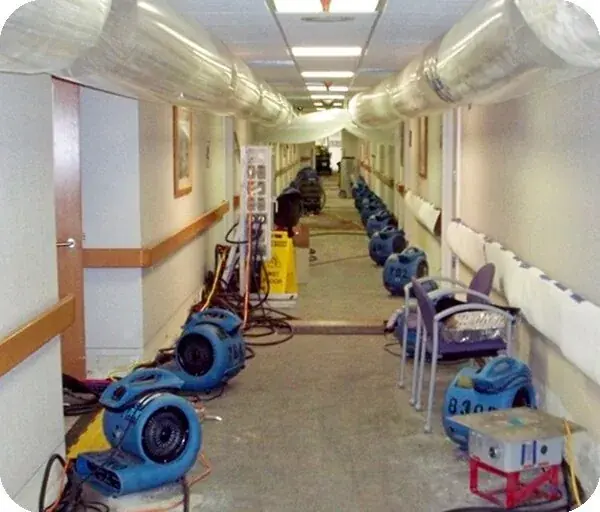
Getting the standing water out is only half of a water loss. The water you cannot see, soaked into drywall, wicked up studs, and trapped under a basement slab, is what grows mold and warps floors if it is not dried out properly. The Mizuna Water Damage team uses IICRC S500 structural drying to pull that hidden moisture out of your Colorado Springs home and prove it is gone with numbers, not guesswork.
How the crew handles structural drying in Colorado Springs
Call & dispatch
A dispatcher answers 24/7 and the nearest Colorado Springs crew rolls with truck-mounted pumps, air movers, and moisture meters.
On-site assessment
The crew finds the source and the full reach of the water, including what soaked into subfloor and wall cavities.
Extract & dry
The extraction crew pulls the standing water, then runs air movers and dehumidifiers to a verified dry standard, not just the surface.
Verify & document
The drying team logs moisture readings until the structure is dry, then documents the loss for your insurance claim.
How professional structural drying works
Drying is a science, not just moving air around. The Applied Structural Drying technicians read the psychrometry, the relationship between temperature, humidity, and how fast a material gives up its moisture, and build a drying system around it.
- High-velocity air movers lift moisture off surfaces and keep the air moving so it can carry water away.
- Low grain refrigerant and desiccant dehumidifiers pull that moisture out of the air so it does not simply resettle somewhere else.
- Moisture meters and thermal imaging map exactly how far the water traveled, inside walls and under floors, so nothing wet is missed.
Trained crews set the equipment to a documented plan and check it every day, adjusting as the readings fall, until the structure reaches a verified dry standard.
What trained crews dry in Colorado Springs homes
Different materials hold water differently, and the high country climate helps some of them while doing nothing for others.
- Drywall and plaster, which wick water upward from a basement flood or a burst line and stay wet inside the cavity.
- Hardwood and engineered floors, which cup and crown when moisture is trapped underneath them.
- Concrete slabs and framing below grade, where dense, cool material slows evaporation to a crawl.
After a burst pipe or a basement flood, the water settles into exactly these low, enclosed, below-grade spots, which is why a proper dry-out matters far more than a quick surface wipe here.
Why dry mountain air and box fans are not enough
Colorado Springs sits near 6,035 feet, and the low outdoor humidity does help surfaces feel dry quickly. That is exactly the trap. The face of the drywall dries while the cavity behind it stays soaked, and the homeowner thinks the job is done. Box fans and a household dehumidifier only move surface air, they cannot pull water out of a wall cavity, from under a slab, or out of framing. El Paso County is also a high radon area, and the same below-grade construction that traps radon traps moisture, so a basement left to dry on its own can grow mold within 24 to 48 hours. The EPA notes that controlling moisture is the key to controlling mold, which is the whole point of drying to a verified standard.
How long drying takes, and getting started
Most residential dry-outs run three to five days, though a saturated basement slab or a plaster wall can take longer at the altitude. You can get a rough read with the drying-time estimator, and crews confirm the real timeline on-site. Crews meter every affected material, place air movers and the right dehumidifiers to a calculated plan, contain the wet zone so the crews dry the damage and not the whole house, and a technician returns each day to read levels and reposition gear until every material reaches a dry standard. The CDC guidance on mold and moisture is a plain reference on why wet material has to reach a dry standard, not just feel dry to the touch.
Water already extracted but not sure it is really dry? Call now. An ASD technician is on-site across Colorado Springs with meters, not guesses.
☎ Call (719) 259-0864Dry to a number, not to the touch
The most common mistake local crews see is calling a room dry because it feels dry. Moisture hides in the cavity, under the slab, and inside the subfloor, and it only shows up weeks later as a musty smell or a stain. The crews dry to a documented moisture reading and prove it, which is what keeps a mold problem from taking hold after the fact. The drying phase follows the same crew that ran your water extraction, so nothing is lost in a handoff.
Why Colorado Springs calls the local pros first
Rapid local response
The response team answers 24/7, and the nearest crew heads out the moment you call, day or night, across El Paso County.
IICRC S500 drying standard
Trained crews run truck-mounted pumps, air movers, and moisture meters, drying to a verified standard, not a mop and a fan.
Claim-ready documentation
The loss is documented with photos and daily moisture readings, the paperwork an adjuster needs to move a claim.
Front Range water experts
Altitude freeze, Hail Alley roofs, burn-scar runoff, and finished-basement sump failure, so the local pros know how water moves here.
From the Broadmoor to Briargate, El Paso County is covered
Colorado Springs water damage pros respond across El Paso County, day or night.
Colorado Springs water damage pros cover all of Colorado Springs and El Paso County, day or night, with a crew dispatched to your neighborhood on the same call.
Coverage runs across Colorado Springs, Old Colorado City, Manitou Springs, Broadmoor, Briargate, Powers, Monument, Fountain, and Security-Widefield.
See every neighborhood and ZIP covered ›Related restoration services
Common questions, answered
How long does structural drying take at the altitude?
Most residential dry-outs run three to five days. The dry mountain air can help surfaces, but a saturated basement slab, plaster, or a below-grade wall cavity holds water longer and can take more time. Local crews monitor daily and stop only when the readings hit a dry standard.
Can I just run fans and a box dehumidifier?
That dries the surface while the cavity behind the drywall stays wet, which is the mistake that leads to mold weeks later. Box fans move surface air only, they cannot pull water out of a wall, from under a slab, or out of framing, so trapped moisture stays put.
How do you know when it is really dry?
The local crews take moisture readings on the affected materials with meters and thermal imaging, then track them daily against a documented dry standard for that material. When every reading is back to normal, the structure is verified dry, and you get the numbers for your records.
Do you dry inside walls without tearing them out?
Often yes. When the local crews catch a loss early, trained crews can dry a wall cavity in place with targeted airflow and injection drying instead of removing the drywall. If the water was contaminated or sat too long, some material has to come out, and crews tell you which and why.
Does drying prevent mold?
It is the single most important step. Mold needs moisture, so drying the structure to a verified standard within the first day or two removes what mold needs to grow. In the high radon, below-grade basements that fast, complete dry-out matters more than almost anything else.
Will insurance pay for the drying equipment?
Structural drying is a standard, covered part of most water damage claims. Trained crews document the equipment, the daily readings, and the timeline so the drying phase is clearly recorded, and the crews can work directly with your adjuster on the scope.
Do you dry hardwood and plaster without ruining them?
Yes, with specialized systems. Hardwood is dried slowly with mats and controlled airflow to limit cupping, and plaster is dried gradually so it does not crack. Rushing either one causes more damage, so local crews match the drying rate to the material.
What does the drying phase cost in Colorado Springs?
It depends on the size of the loss and how many air movers and dehumidifiers the space needs for how many days. You can get a rough estimate from the drying-time estimator, and the local crews confirm an exact figure on-site. Call (719) 259-0864 for a straight answer.
Colorado Springs' water damage crew is standing by
Water sitting means damage spreading. Call Mizuna Water Damage and a local crew heads out across El Paso County, day or night.
(719) 259-0864Call now, a local crew picks up day or night